How Automatic Laser Welding Machines Are Changing Modern Production Lines
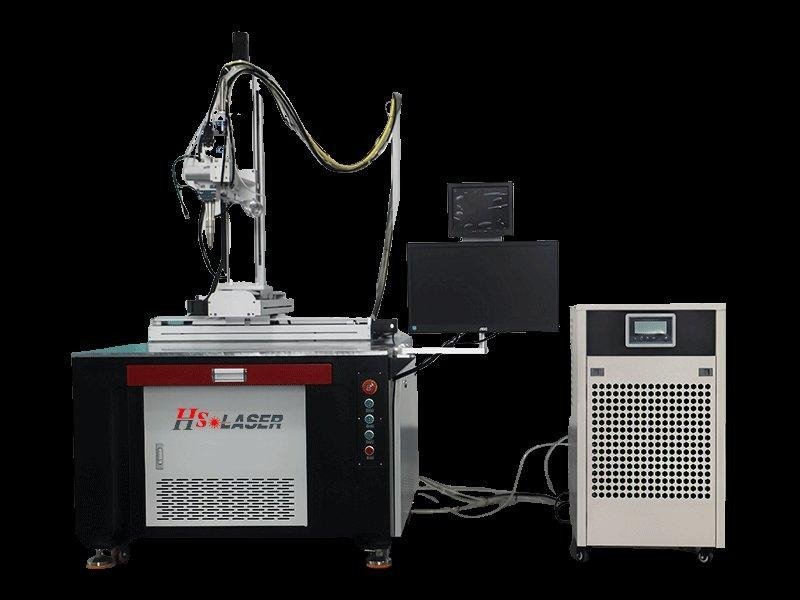
Production lines are changing. Where rows of welders once worked with torches and masks, automated cells now join parts with beams of light, guided by robots and controlled by software. The automatic laser welding machine is at the centre of this shift, and it is changing what factories can make, how fast they can make it, and how consistent the results are. This article looks at how the technology is reshaping modern production.
Speed That Manual Welding Cannot Match
An automatic laser welding machine works far faster than a manual welder. The laser beam moves at high speed along the joint, and the welding process itself is quick, since the concentrated energy melts a narrow zone almost instantly. A weld that takes a skilled operator a minute by hand can be completed in seconds by an automated system.
That speed compounds across a production line. When each weld takes less time, the line produces more parts per hour, and the factory needs fewer welding stations to meet its targets. For high-volume products such as car bodies, battery packs and consumer electronics, that difference in throughput is decisive.
Consistency on Every Part
Manual welding depends on the skill and concentration of the operator, and even the best welders vary slightly from part to part. An automatic laser welding machine repeats the same programme exactly, every time. The power, speed and beam position are controlled by software, so the thousandth weld is identical to the first.
This consistency matters for quality control. When every weld is the same, inspection becomes simpler and more reliable, and the number of defective parts falls. For safety-critical products, that reliability is not just convenient, it is essential.
Narrow Welds and Less Distortion
Laser welding concentrates energy into a very small area, which produces a narrow weld with a small heat-affected zone. The surrounding material stays cool, so the part does not warp or distort the way it can with conventional welding. This is a major advantage for thin materials and precision assemblies, where even slight distortion can make parts unusable.
The narrow weld also means less finishing work. There is little or no spatter to clean up, and the weld bead is often smooth enough to need no grinding. That saves time and labour after the welding itself is done.
Integration With Robots and Production Systems
The real power of an automatic laser welding machine appears when it is integrated into a full production system. Robots load and unload parts, vision systems check the position of each joint before welding, and sensors monitor the weld quality in real time. If a part is misaligned, the system can adjust or stop before a bad weld is made.
This integration connects welding to the wider factory. Production data flows into quality systems, maintenance schedules are planned from machine data, and the whole line can be monitored from a central control room. The welding cell becomes part of a connected, data-driven operation rather than an isolated workstation.
5 Ways Automation Changes the Welding Shop
- Higher throughput: faster welds mean more parts per hour from the same floor space.
- Consistent quality: software-controlled welding repeats the same result every time.
- Less distortion: narrow, low-heat welds keep thin parts true to shape.
- Less finishing: clean welds need little or no grinding or cleanup.
- Better data: integrated systems track quality and flag problems early.
New Possibilities for Product Design
Automation also changes what designers can attempt. Joints that were difficult or impossible to weld by hand, such as welds in tight spaces or on delicate assemblies, become practical when a robot positions the beam precisely. Designers can use thinner materials, since laser welding distorts them less, and can create lighter products that still meet strength requirements.
This is particularly important in electric vehicles, where battery enclosures and lightweight body structures depend on precise, low-distortion welding. The automatic laser welding machine makes designs possible that manual methods could not deliver reliably.
Choosing an Automatic Laser Welding Machine Manufacturer for Your Line
Automation only delivers its full value when the system is designed well, and that design work is where an automatic laser welding machine manufacturer earns its fee. The manufacturer studies your parts, your volumes and your quality requirements, then configures the machine, the fixtures and the automation to match. An automatic laser welding machine manufacturer with experience in your industry will know which fixtures work, which parameters produce reliable welds and which problems to avoid. The best suppliers weld samples of your parts before you buy, so you can see the results with your own eyes. An automatic laser welding machine manufacturer that offers strong after-sales support will also train your team and keep the line running long after installation. Talk to more than one automatic laser welding machine manufacturer before you decide, and compare not only the machines but the service behind them.
Frequently Asked Questions
Does automation replace skilled welders?
It changes their role. Skilled welders become programmers, operators and quality specialists, using their knowledge to set up and supervise automated systems rather than holding the torch. Most automatic laser welding machine manufacturers include operator training in the package, so the team learns the new skills as part of the installation.
Is automatic laser welding suitable for small production runs?
Yes, increasingly so. Modern systems can be reprogrammed quickly, so even small batches benefit from the speed and consistency of automation. An automatic laser welding machine manufacturer can advise on the smallest batch size that makes automation worthwhile.
What maintenance does an automated welding cell need?
Regular checks of the optics, motion system and safety equipment, plus planned servicing of the laser source. Well-maintained systems run reliably for many years.
See also: Enhancing Team Performance In Finance With Strategic Keynote Sessions
Final Thoughts
Automatic laser welding machines are changing production lines by making welding faster, more consistent and more precise than manual methods allow. Choosing an experienced automatic laser welding machine manufacturer is the best way to make that change work for your business. They reduce distortion, cut finishing work and connect welding to the wider factory through data and automation. As the technology becomes more accessible, it is reshaping not only how factories weld, but what they are able to build.