The Role of Graphite Seal Rings in Improving Aluminum Casting Efficiency
Aluminum casting requires precise temperature control, consistent molten metal flow, and reliable equipment performance to produce billets with a smooth surface and uniform structure. Every component in the casting assembly contributes to the final result, including the sealing and guiding elements installed around the crystallizer. High-quality graphite seal rings help support these operations by providing thermal stability, controlled metal flow, and a suitable interface between the hot-top platform and cooling zone.
Understanding the Hot-Top Casting Process
Hot-top casting is widely used in aluminum billet production. During this process, molten aluminum passes from a distribution system into a water-cooled crystallizer, where it begins to solidify and form a billet.
The transition between the high-temperature metal and the cooling equipment must be carefully controlled. Uneven heat transfer or inconsistent metal flow can contribute to surface defects and production instability.
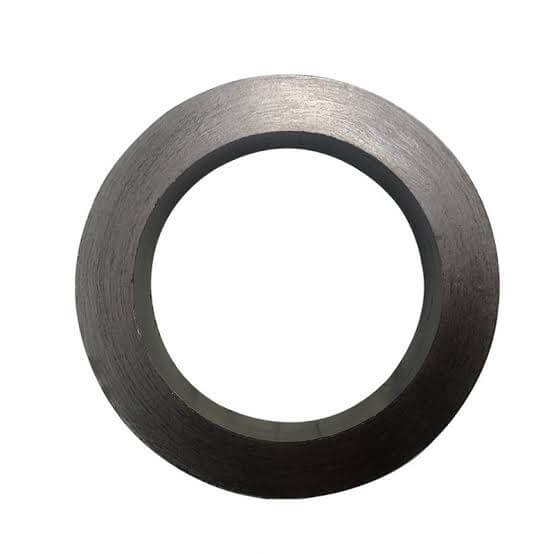
Graphite rings are installed at the top of the crystallizer to help manage this transition. Their thermal and surface properties make them suitable for this demanding environment.
How Graphite Rings Contribute to Casting Efficiency
Graphite performs several important functions during hot-top casting.
1. Controlled Heat Transfer
Graphite has useful thermal conductivity characteristics that help manage heat distribution around the casting area. Maintaining suitable thermal conditions supports a more controlled solidification process and helps reduce premature crust formation.
2. Reduced Metal Sticking
Graphite naturally offers low-friction and non-wetting characteristics in suitable molten-metal applications. These properties help reduce unwanted adhesion between the casting material and the ring surface, supporting smoother billet formation.
3. Improved Sealing Performance
A properly fitted ring helps seal the connection between hot-top components. This can reduce unwanted molten metal leakage and support more controlled movement through the casting assembly.
4. Thermal Insulation
The graphite component also helps separate high-temperature molten metal from nearby water-cooled equipment. This contributes to managing the temperature difference between the insulation area and crystallizer.
Why Isostatic Graphite Is Used
Material selection has a direct influence on the performance of casting components. Isostatic graphite is produced through a process that applies pressure uniformly, helping create a material with consistent structure and properties.
For hot-top applications, high-purity graphite can offer several useful characteristics:
- Good resistance to high operating temperatures
- Thermal shock resistance during temperature changes
- Consistent material structure
- Low-friction surface characteristics
- Chemical stability in suitable casting environments
Haoxing Graphite specifies high-purity isostatic graphite with a purity of at least 99.5% for its hot-top cast graphite ring. Its product information also describes anti-oxidation impregnation to improve resistance to oxidation during operation.
Manufacturing Precision and Product Consistency
Material quality alone does not determine whether a graphite ring will perform correctly. Accurate dimensions and surface finishing are equally important.
CNC machining helps manufacturers produce rings with precise inner and outer diameters, consistent thickness, and suitable surface quality. These details allow the component to fit the intended crystallizer and casting platform.
Quality inspection should include dimensional checks, surface examination, and material consistency assessments. Anti-oxidation treatment may also be applied according to the product’s intended operating conditions.
Factors to Consider When Selecting a Graphite Ring
Foundries should evaluate several technical requirements before ordering replacement or new graphite components.
Casting Equipment: Confirm the crystallizer model and installation dimensions.
Billet Diameter: Select a ring compatible with the required billet size.
Graphite Grade: Review purity, density, and material characteristics.
Operating Conditions: Consider casting temperature, production speed, and exposure to oxidation.
Customization: Discuss special dimensions and machining requirements when standard products do not match the equipment.
Haoxing Graphite lists compatibility with round billet crystallizers ranging from 50 mm to 160 mm and offers customized manufacturing according to equipment requirements.
Conclusion
Graphite rings are important components in hot-top aluminum casting because they support heat management, sealing, and smooth molten metal flow. Their performance depends on suitable graphite materials, accurate machining, and compatibility with the casting equipment. By selecting properly manufactured components and maintaining appropriate operating conditions, foundries can support more consistent production and reliable casting performance.